
There are unlimited hours spent in the art of tattooing, debating machines, needles, and inks. However, the grip is one of the most important elements of a sustainable career that should not be disregarded. A tattoo grip is not an add-on feature but a basic element of safety gear that safeguards the most valuable thing that an artist possesses: his hands.
One of the threats that is prevalent in the industry is Repetitive Strain Injuries (RSIs) such as carpal tunnel syndrome and chronic tendonitis. The sustained vibration, awkward hand positioning, and sustained pressure may cause debilitating pain, numbness, and even damage to the carpal tunnel. It is not just that one can tough it out, but invest in ergonomics at the ground level. Always look for the best tattoo numbing cream company to buy quality products.
The Anatomy of a Grip
The selection of the appropriate grip should be based on three factors, i.e., material, diameter, and hygiene.
a. Used Materials
Its grip material has a direct effect on vibration dampening and tactile feedback.
1. Silicone
A popular favorite among most workers. Silicone grips have good cushioning to absorb the machine vibration, they are naturally non-slip even in wet conditions, and very simple to wash and autoclave. They offer the ideal softness or control.
2. Foam
Foam grips are an extraordinarily soft and highly effective vibration-damping cushioning surface, used as either a disposable or added cushioning layer. These are perfect because the artists who use them have fatigue in their hands, but they might not provide the same grip as silicone.
3. Disposable Grips and Covers
The gold standard in cross-contamination control is in the form of these single-use items. A reusable latex-free, or thin plastic, disposable covering is slipped over a reusable metal or silicone grip. This guarantees an absolutely sterile surface to all clients without the need to lose the ergonomics of the base grip.
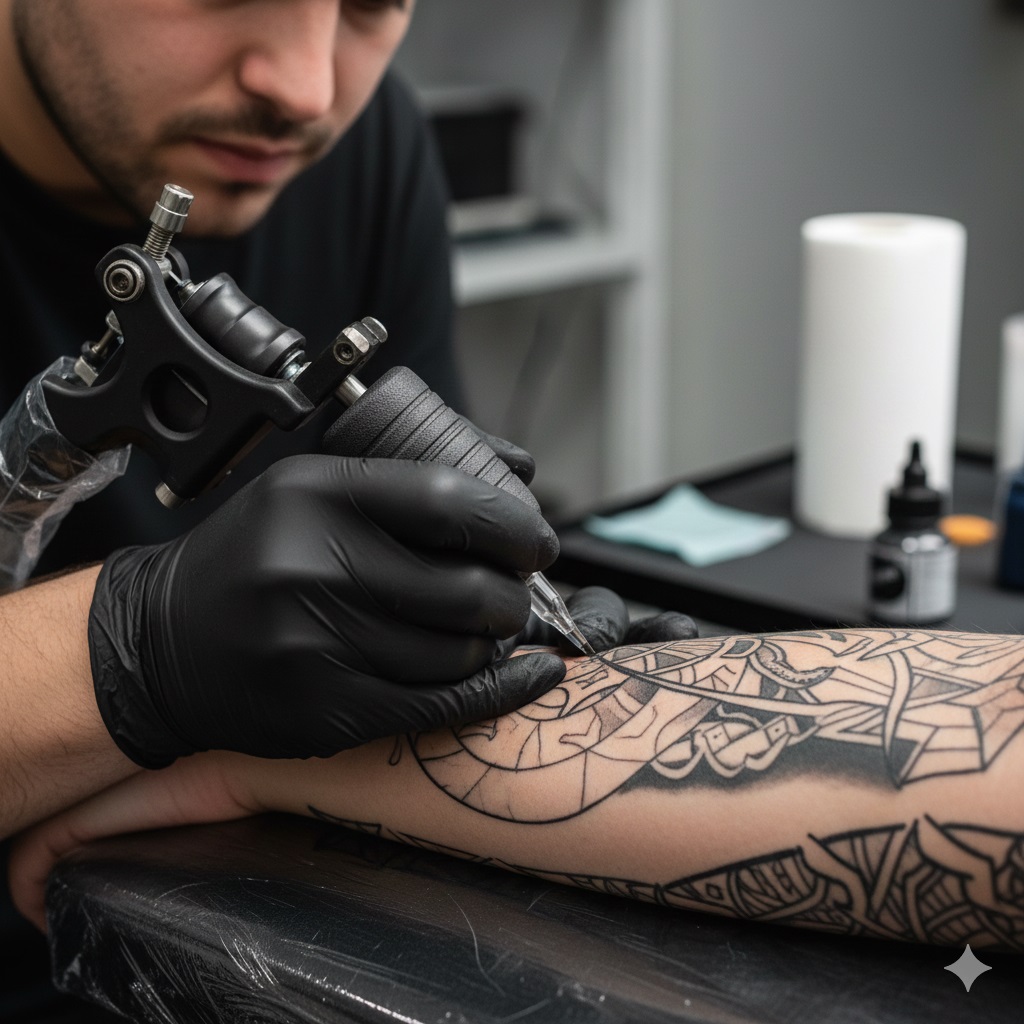
b. What is the Key to Natural Grip
One size does not fit all. When you grip something that is too thin, you find yourself clenching your hand, and this causes a lot of strain on your forearm and wrist.
1. When you use a grip of a bigger diameter, your fingers are more relaxed and work in a more natural position.
2. This minimizes the muscle work needed to support the machine, minimizing fatigue and danger of cramping during lengthy sessions.
3. There are lots of brands that provide grips of small, medium, and large diameters to accommodate varying hand sizes.
1. No Guess Your Size
Experiment with sizes. Your hand must hold as though it were a continuation of your hand, and not something you have to squeeze.
2. Fuse to Stay as Comfortable as Possible
Add a high-quality, reusable silicone grip due to its ergonomics, and add a disposable cover to it due to its unprecedented hygiene. The two-part system is a game-changer for the safety of the artists and the trust of the clients. Talk to a quality tattoo numbing cream company before buying any product.
3. Cleanliness is Non-Negotiable
An autoclave-safe silicone grip or even a disposable cover cannot save you and your clients unless a strict hygiene policy is adhered to.
Your trade is on the constant, sound health of your hands. When you pick a grip that focuses on ergonomics, you are not merely purchasing a product; you are making a long-term investment in the viability and prosperity of your artistic career.