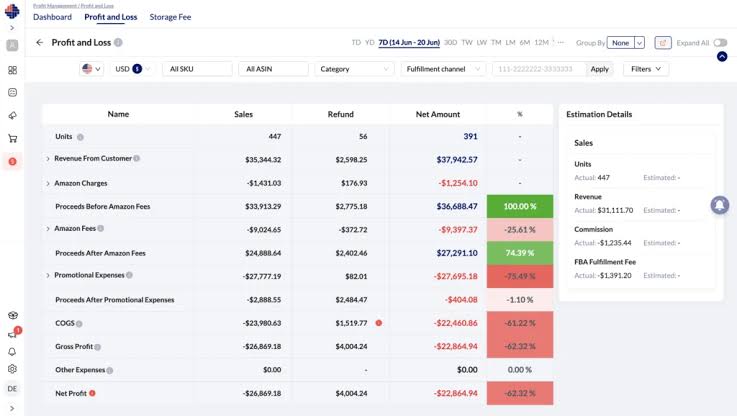
Running a successful Amazon business involves much more than generating sales. Sellers must monitor expenses, advertising costs, shipping fees, storage charges, refunds, and marketplace commissions to understand their true profitability. Without accurate financial insights, it becomes difficult to identify which products are performing well and which ones are reducing overall earnings. This is why using an amazon profit tracker has become an essential part of managing a successful e-commerce business.
A reliable amazon profit tracker allows sellers to calculate real profits instead of relying solely on revenue figures. By automatically accounting for Amazon fees, fulfillment costs, advertising expenses, and other operational charges, these tools provide a clear picture of business performance. Accurate profit tracking helps sellers make informed decisions about pricing, inventory management, and future investments.
Many online sellers also use resources like myrealprofit.com to gain better visibility into their financial performance. Dedicated profit-tracking platforms simplify complex calculations, making it easier to monitor margins, identify trends, and improve overall business efficiency without spending hours working with spreadsheets.
Why Revenue Doesn’t Tell the Whole Story
Many new Amazon sellers focus primarily on sales numbers, believing that higher revenue automatically means greater profits. However, revenue only represents the total amount earned before expenses.
Several costs affect the final profit, including:
- Amazon referral fees
- Fulfillment by Amazon (FBA) fees
- Shipping expenses
- Product sourcing costs
- Storage fees
- Advertising costs
- Refunds and returns
- Currency conversion fees
Without considering these expenses, sellers may mistakenly believe they are operating profitably when actual earnings are much lower.
Benefits of Using an Amazon Profit Tracker
A dedicated profit-tracking tool provides valuable insights that help sellers make smarter business decisions.
Accurate Profit Calculations
Instead of manually calculating every expense, automated tracking software provides real-time profit figures after deducting all applicable costs.
Better Inventory Decisions
Knowing which products generate the highest margins helps sellers prioritize inventory purchases and discontinue underperforming items.
Advertising Performance Analysis
Amazon advertising can quickly consume profits if campaigns are not carefully monitored. Profit tracking allows sellers to compare advertising costs with actual returns.
Financial Planning
Clear financial reports make budgeting, forecasting, and cash flow management much more accurate, helping businesses plan for future growth.
Important Metrics Every Seller Should Monitor
Successful Amazon businesses track more than just total sales.
Key performance indicators include:
Net Profit
This represents the actual earnings remaining after all expenses have been deducted.
Profit Margin
Profit margin shows how much profit is generated from each sale, making it easier to compare products.
Return on Investment (ROI)
ROI helps determine whether product sourcing and advertising campaigns are delivering acceptable returns.
Advertising Cost of Sales (ACoS)
Monitoring advertising efficiency ensures marketing budgets remain profitable.
Inventory Costs
Tracking storage fees and inventory turnover helps reduce unnecessary expenses while improving operational efficiency.
How Profit Tracking Supports Business Growth
Having access to detailed financial data allows sellers to identify opportunities for improvement.
For example, if one product consistently delivers higher profit margins than others, sellers can allocate more inventory and advertising resources to that product. Likewise, identifying products with declining profitability enables quicker adjustments before losses become significant.
Profit tracking also supports better pricing strategies by revealing how discounts, promotions, and advertising campaigns affect overall earnings.
Common Mistakes Sellers Make
Many Amazon sellers unintentionally reduce profitability by overlooking hidden costs.
Common mistakes include:
- Ignoring Amazon marketplace fees
- Failing to account for advertising expenses
- Underestimating shipping costs
- Not monitoring product returns
- Relying only on revenue reports
- Using outdated spreadsheets for financial tracking
Avoiding these mistakes can significantly improve long-term business performance.
Choosing the Right Profit Tracking Solution
When selecting a profit tracker, sellers should look for features that simplify financial management while providing accurate reporting.
Useful features include:
- Automatic Amazon account integration
- Real-time profit calculations
- Expense tracking
- Advertising analytics
- Inventory reporting
- Financial dashboards
- Exportable reports
- Multi-marketplace support
Choosing software that updates data automatically reduces manual work and improves reporting accuracy.
Final Thoughts
Success on Amazon depends not only on increasing sales but also on understanding true profitability. Accurate financial insights enable sellers to optimize pricing, manage inventory more effectively, improve advertising performance, and make confident business decisions.
By using a dependable profit-tracking solution and regularly reviewing business metrics, Amazon sellers can gain greater control over their operations and build a more sustainable, profitable business. As competition continues to grow in the e-commerce marketplace, investing in effective profit tracking has become an important step toward long-term success.